Engaging Learners Within the Classroom

Teaching is a work of art. However, teaching is hard. Teaching is hard because as educators we have to prepare lessons and content to teach to our students, but we must also ensure that our students are engaged at all times in order for them to learn as much of that content as possible. Students that are not engaged, are students that are not learning. That is a fact, and I know there is research out there that supports this idea. Marzano, a man not unknow to the world of education knew this fact about students. With this he created a classroom model on how to keep students in the classroom engaged in order to make sure they are learning.

Among all things with teaching engagement single handedly starts with solid classroom procedures and routines. The more that students have these down, the more engaged and into learning they are going to be. Just think about it for a moment, when students have less opportunities to goof off because they know what is expected of them and these routines are in place, they know that their purpose is to learn. If students don’t have any solid classroom procedures and routines, there are more opportunities for them to either goof off by themselves or get a group of friends to goof off with. It seems to me that everything in the classroom loops back around to solid classroom procedures and routines.

Another way to make sure students are engaged is to be relaxed, confident and focused. Easier said than done, right? Being confident relaxed and focused stems from simply being PREPARED. If you put in the time to prepare for class the next day or week, you are going to feel confident and relaxed. If you know the learning standards and targets that need to be met with each lesson, then you are going to be focused and looking towards the endgame. Now that’s not me saying that its all rainbows and unicorns from just being prepared, we are thrown curveballs everyday in the classroom and there is no way we could be 100% prepared for that. But, if students know that you are confident, they will be confident. It’s also important to keep in mind that students need positive affirmations and feedback when they are doing good in the classroom – don’t let this go unnoted.

The most time consuming yet rewarding thing to engage students is to think and brainstorm new ideas and challenges for the students to engage with. Engage students with a new game, a new project-based learning project or even by telling them stories that make the content relevant. Students are intrigued by the littlest things. Even starting a math problem with, “hey guys, I have a problem and I really need help solving it. My husband told me that I could, but a new gaming system and I need to know which one I have enough money for, and here I have these coupons, can you help me out?” This simple lead in could add a level of engagement to learning percent’s that you didn’t have before. Think of new ways for students to compete an assignment or learn content and this will help them become more engaged and ready to learn.

Marzano also said to make the learning meaningful. If learning is relevant to the students, they are going to be more hype about learning it. If they have no idea what you are talking about and they have no idea how it applies to them, they are going to look at you like you have five heads. When we speak on engagement, we just have to realize that students are programed to want to learn, thus we have to make learning interesting so that they WANT to learn.
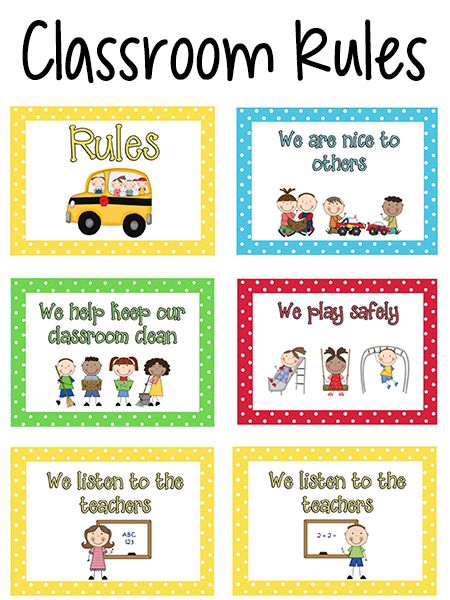
Effective Instruction and Management

When thinking about setting up a classroom that will ensure that effective instruction and management are taking place there are a few, complex items that need to be thought out in their entirety. The video referenced these two items in detail and thus I would argue that they lay the foundation for a successful classroom. These items being: how to best support students, which starts with relationships and also the classroom environment.

When we look at how to best support students in the classroom, we first must examine the relationship between ourselves and the students. These relationships need to be positive for them to be effective. I’m not saying here that you must know little Jimmy’s second cousin twice removed or even his favorite color. But you should be able to know his strengths and his weaknesses within the classroom as well a few of the hobbies that he has outside of school. If the classroom teacher does not have this positive relationship with the student, it will be ever so hard to get them the tools and information that they need to be successful through the school year and future school years.

Once relationships are built with each student, we can start to examine how to best support them. It’s important to remember the simple equation, teacher plus student behaviors equals outcomes. And today, all teachers want is outcomes. Because if there are no outcomes, we have no purpose. To name a few, some teacher behaviors that can support students are modeling, goals, consistent routines, guided practice and proximity. When thinking about modeling, we must show and tell students what is expected of them. If we simply give students a worksheet without telling or showing them what they should be doing, there is going to be a lot of strange things taking place on that worksheet because students are not aware of what the teacher wants them to do with it. Proximity is also a big one because students need to know that the teacher is there and present in case, they need help or also proximity can help keep unwanted behaviors from taking place.

The other important point highlighted within the video is the classroom environment. With the environment it is important to note that things need to be consistent. When things are consistent from day to day, students are less likely to act out because there is that sense of safety and security taking place. It is also important that expectations are laid out everyday within the classroom environment. Expectations also need to be consistent in order to ensure that students know what to do every time. As with life, it is known that things change and as classroom teachers we have to be able to adapt. Thus, if these changes need to take place within the classroom, students need to know what these changes are. Students are not as go with the flow as we would like them to be and sometimes, they will flip out if reading time comes before math and usually it doesn’t. But in order to ensure that they understand we can tell them what is changing and then explain to them why its changing. Connecting this to the relationship piece. We must note that if these relationships are strong between the teacher and the students then these changes that may or may not take place will be much easier for the students to understand.

The Importance of Classroom Routines and Procedures

When I was in elementary school in the fourth grade, I had a teacher who was very unpredictable. Each day that we would come to school it would be a guessing game as to what would come next. We never had a consistent schedule that we followed from day to day. Looking back and reflecting on this I would venture to say that there were more behavioral problems that year as compared to any other year. Also let me take this chance to remind you that I had sixteen people in my class and these same people followed me through all of elementary school, kindergarten through sixth grade. The only difference being that in the grades we encountered before fourth, we always had a consistent class schedule in which we did things.

When looking at the eight effective classroom practices it is easy to see that they are all important, however there are some that need to be paid close attention at different parts in the year. In my personal opinion, I believe that classroom procedures and routines is an integral practice that needs momentous amounts of attention at the beginning of the school year. I say this because it will set the tone for the rest of the school year.

When students know the classroom procedures and routines, they are more likely to be engaged because they understand what is coming next. To establish a sense of security within the classroom routines need to be followed and integrated at the beginning of the school year and reinforced throughout the year.

Routines and classroom procedures need to be strategically planned out for many different pieces of the school day. Such as, how to line up at the door, how to turn in papers, how to transition from one subject to the next ect. For best classroom practice, these procedures need to follow a few requirements. Routines need to be observable, measurable, positively stated, understandable and always applicable. If you have routines and procedures that are not observable by the teacher, then what is the point. One has to be able to actually see the routine taking place in order to know if students are following classroom procedure. Procedures also always need to be applicable during the year. To provide the sense of safety and structure that one is going for within the classroom, students need to always be expected to follow the same procedures.  

Circling back to my experience in fourth grade, I think that we would have been better behaviorally if we knew what we were going to do next and how we were expected to do things. There was so many unknowns within the classroom that there was so much unpredictability in how we were going to behave. I think one important piece of routines and procedures in the elementary grades is that they can be made fun with cool jingles or songs. They don’t have to be boring and dull. But they are most definitely integral in success throughout the school year.

What To LOVE about PBIS and Conscious Discipline

Holy moly are the possibilities endless regarding frameworks for classroom management practices throughout the world. Just to name a few we have PBIS, Leader in Me, BIST and also conscious discipline. Many have their pros and cons, as with all things however I air on the side of agreeing with more of what the PBIS and conscious discipline frameworks stand for. It is a dream of mine to teach early childhood education and I believe that these two frameworks would fit perfectly into the mold of the type of environment I want to build for my future students.

To begin we have conscious discipline. Here are few of the things that I super LOVE about it.

1. I enjoy the focus on building social emotional skills as well as self-regulation. Within the younger grades especially. Children between the ages of 1-5 are growing and changing every day, with this added focus on social emotional learning students are not just learning what to do and what not to do but they are learning the why behind it and what their actions are doing to others. This helps build a more conscious member of society, even in the younger ages.

2. I love the voice that it gives to students. Instead of a teacher telling a student what they are doing is right or wrong and why conscious discipline opens up a conversation that gives students a voice to express and reflect on their actions.

3. Conscious discipline eliminates the idea of rewarding or punishing behavior.

4. Conscious discipline also allows for stronger relationships to be built between the teacher and students, as well as the students within the classroom.

Shifting gears to PBIS now.

1. PBIS uses three different tiers of intervention levels. This is cool because it gives the teachers options if behaviors within the classroom persist past the first tier. Which we can always hope that they won’t, but we couldn’t be that lucky.

2. The focus on prevention over punishment.

3. The main goal that all students can learn the proper behaviors. Overall, going back to my reflection on Colvin, I believe that students MUST be given the proper tools to succeed with their behaviors at the beginning of the year. Taking time and days to teach the wanted behaviors and the consequences will save the teacher many hours of instructional time because of unwanted behaviors.

Overall these are the points that I enjoy about each PBIS as well as conscious discipline. These are also points that I will use to guide my future classroom climate.

Colvin’s Principles of Behavior Management: An Analysis By An Undergrad Student

Classroom management. Two dirty little words that can make or break a first-year teacher. It is no doubt that classroom management is hard, being as every group of students is going to be different. No two groups of students are going to be effectively managed the same exact way from year to year. Different students are going to bring different behaviors to the table, and thus the teacher will have to adapt strategies to fit the needs of each students. But their does exist a certain baseline understanding on how to curb problem or unwanted behaviors within the classroom.

Colvin lays out seven key principles to behavior management. They are as follows:

1. Goals of correction procedures

2. The role of teacher attention in correction procedures

3. The nature of behavioral intensity, escalation and defusion

4. The nature of behavior chains

5. The role of behavioral extinction and extinction bursts

6. The power of personal reactions

7. Establishing fluent responses

To focus on principle one, I think it is extraordinarily important for all teachers to have goals surrounding how they want to deal with behavioral management in the classroom. Colvin outlines three main goals. The first goal being that of interrupting the problem behavior and redirecting the behavior. The second goal is to ensure that students perform the expected behavior in similar situations. And the third is to avoid escalation or acceleration of the problem behavior (Colvin, 6). I tend to air on the side where I think that there are better ways then calling out problem behaviors in front of the whole classroom for a few reasons. One, when calling out problem behaviors in front of the whole class precious class time in interrupted. And reason two being that embarrassing the child in front of their peers is sometimes not the answer we were searching for, and finally the student might want the attention from the teacher in hopes of becoming this sort of class clown figure. Colvin also recognizes that at times, calling out these students for the unwanted behavior actually causes more students to do the same behavior more often. However, I do believe these are intelligent and realistic goals for all teachers to build off of.

To me, and being an undergrad student with little experience with classroom management I would take what I say with a grain of salt, I would believe that a lot of classroom management comes from the first few weeks of school. When students first arrive within those first few weeks it is SO important that their expectations are laid out on the table. The conversation of “this is what I expect, and this is how I want it done” needs to take place. As well as the conversation of “this is what it would look like if a student was not following my expectations,” followed by everyone’s favorite of, “these are the consequences when my expectations are not followed.” Laying these rules and expectations out early will allow the students to understand what is acceptable and what is not and having the consequences laid out will make it much easier when the students stray from what is expected. I think with these to they need to be as explicit as possible, leave no room for imagination within the rules.

Click to access 36920_Colvin_Ch1.pdf

Introduce Yourself (Example Post)

This is an example post, originally published as part of Blogging University. Enroll in one of our ten programs, and start your blog right.

You’re going to publish a post today. Don’t worry about how your blog looks. Don’t worry if you haven’t given it a name yet, or you’re feeling overwhelmed. Just click the “New Post” button, and tell us why you’re here.

Why do this?

  • Because it gives new readers context. What are you about? Why should they read your blog?
  • Because it will help you focus you own ideas about your blog and what you’d like to do with it.

The post can be short or long, a personal intro to your life or a bloggy mission statement, a manifesto for the future or a simple outline of your the types of things you hope to publish.

To help you get started, here are a few questions:

  • Why are you blogging publicly, rather than keeping a personal journal?
  • What topics do you think you’ll write about?
  • Who would you love to connect with via your blog?
  • If you blog successfully throughout the next year, what would you hope to have accomplished?

You’re not locked into any of this; one of the wonderful things about blogs is how they constantly evolve as we learn, grow, and interact with one another — but it’s good to know where and why you started, and articulating your goals may just give you a few other post ideas.

Can’t think how to get started? Just write the first thing that pops into your head. Anne Lamott, author of a book on writing we love, says that you need to give yourself permission to write a “crappy first draft”. Anne makes a great point — just start writing, and worry about editing it later.

When you’re ready to publish, give your post three to five tags that describe your blog’s focus — writing, photography, fiction, parenting, food, cars, movies, sports, whatever. These tags will help others who care about your topics find you in the Reader. Make sure one of the tags is “zerotohero,” so other new bloggers can find you, too.

Design a site like this with WordPress.com
Get started